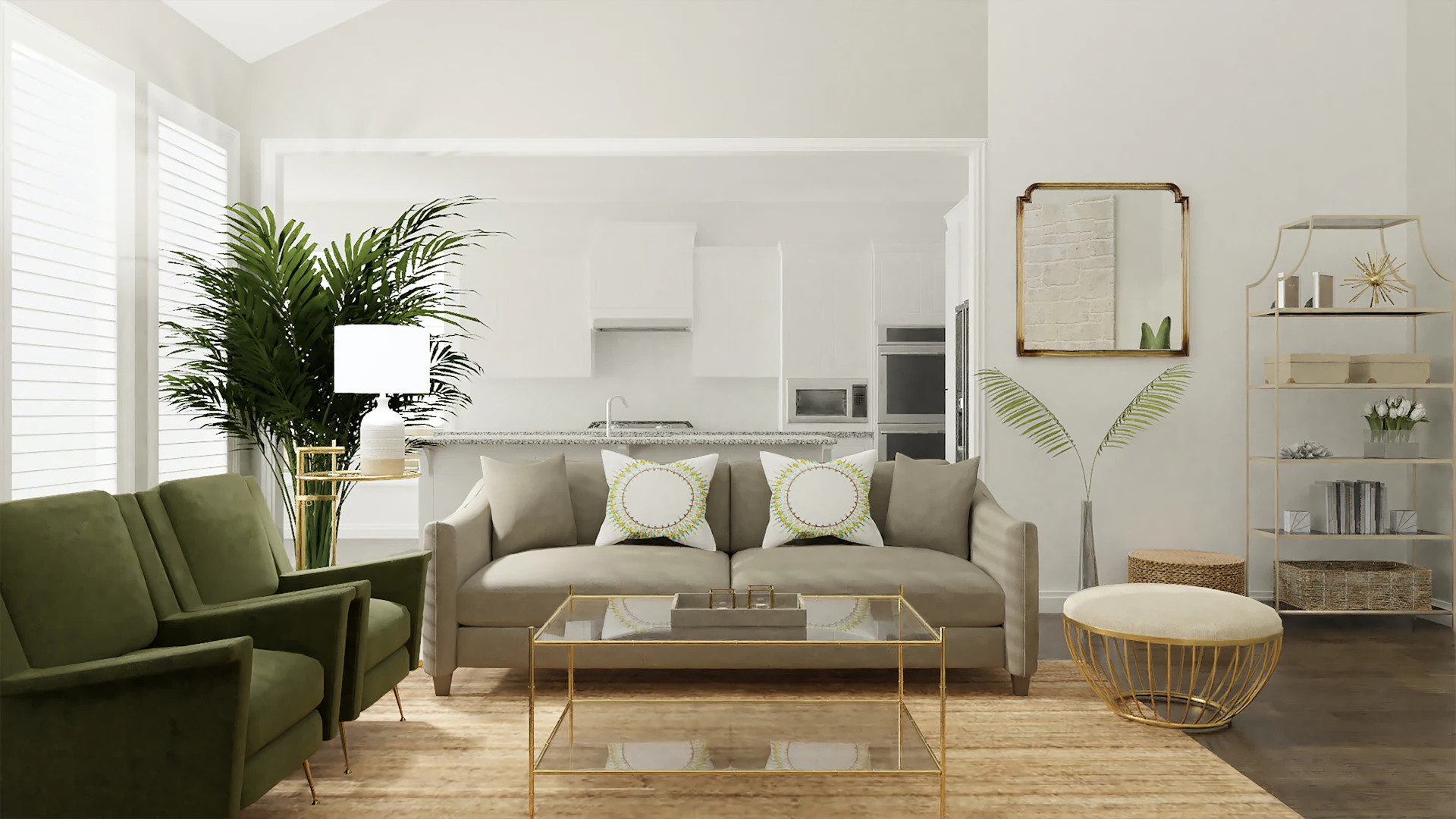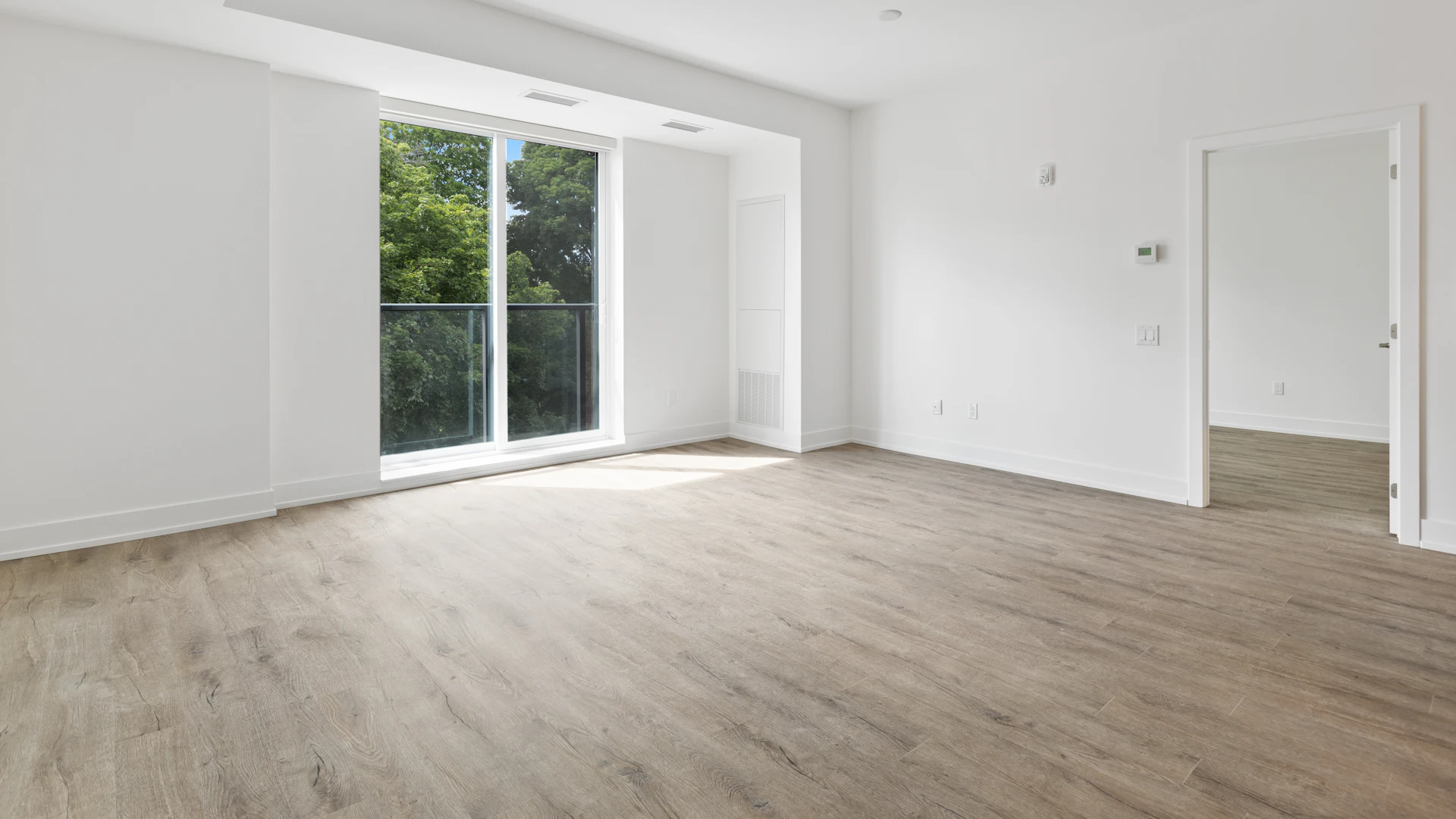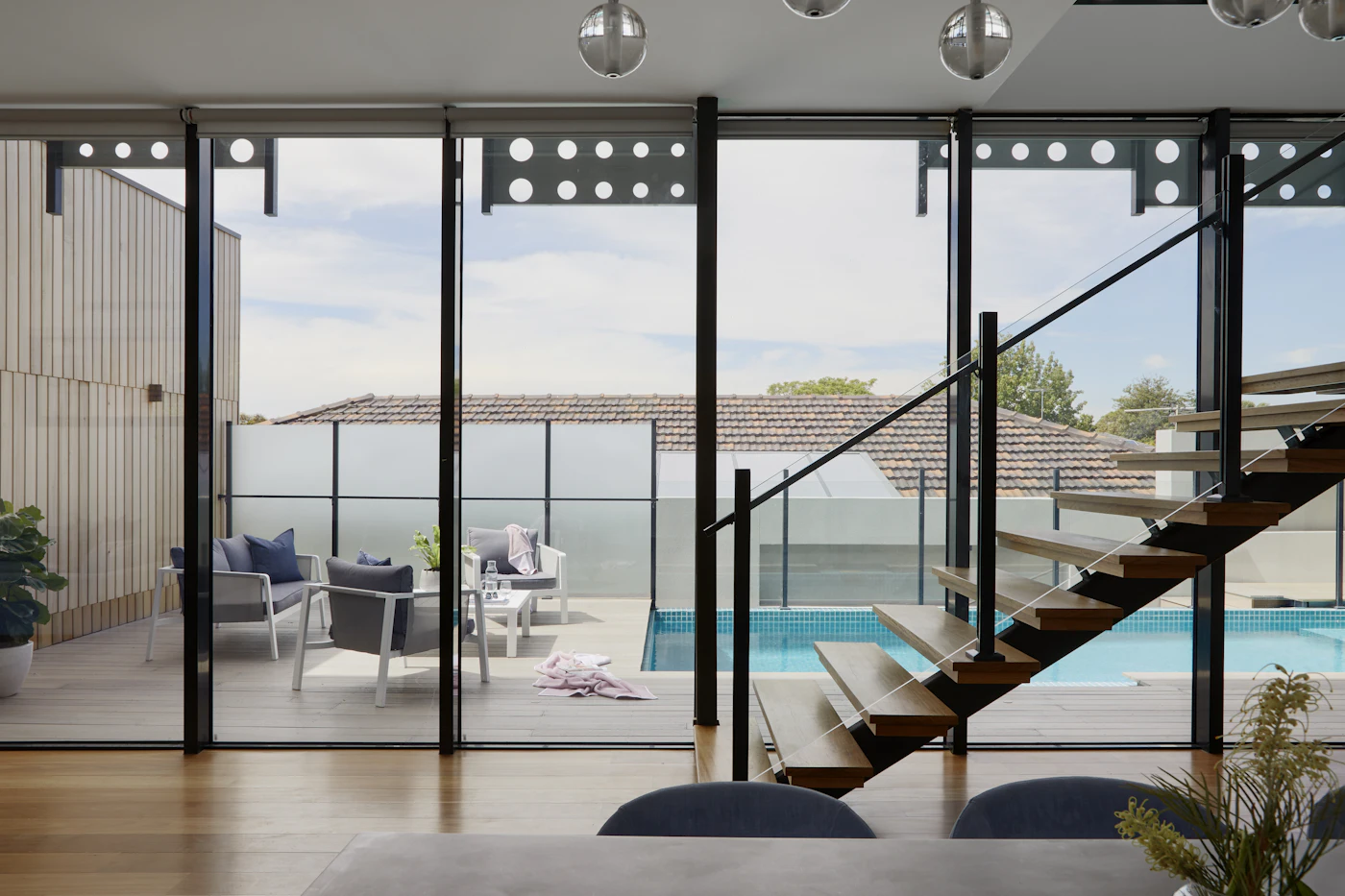
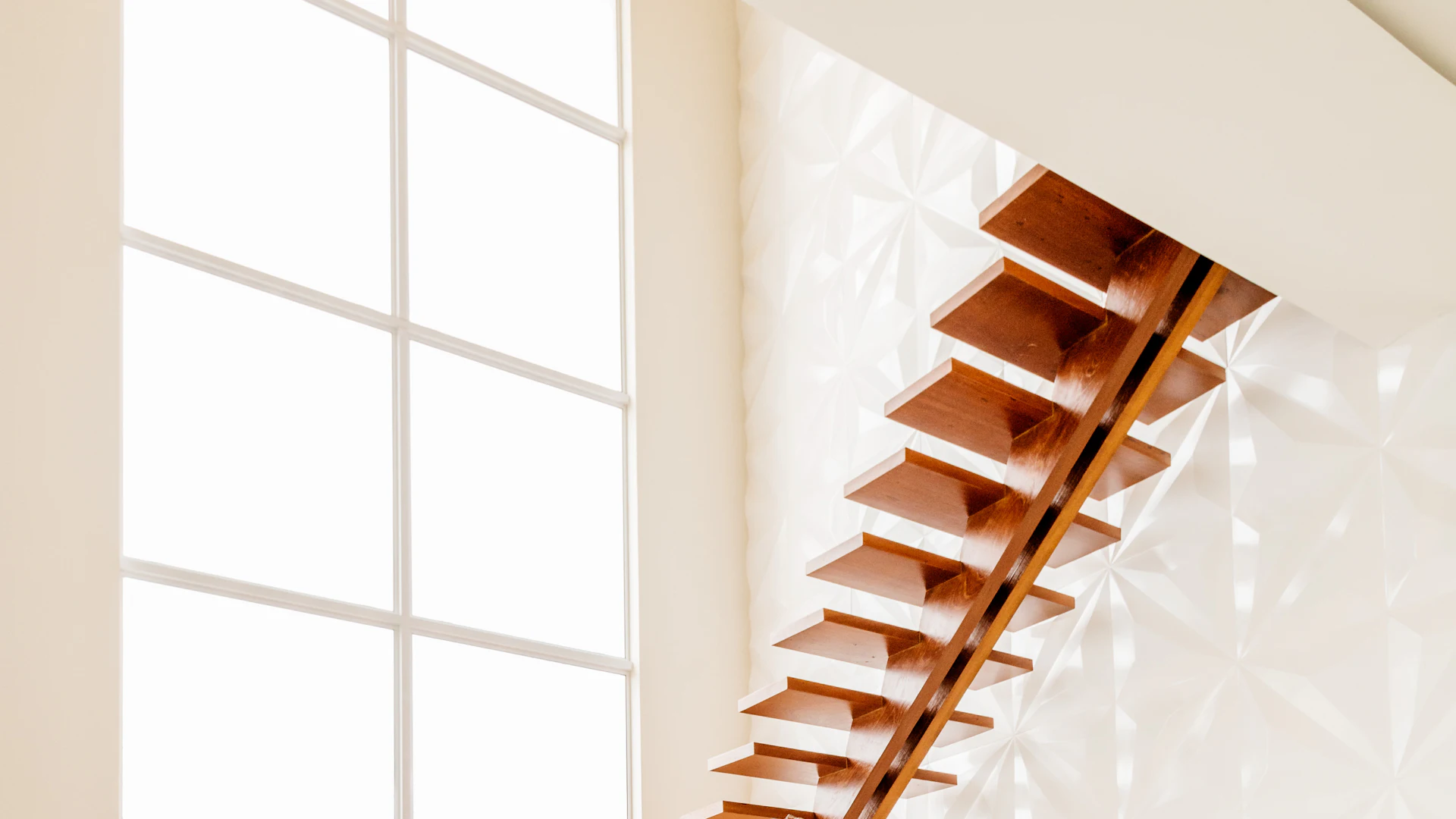
Before choosing materials, we watch how light moves through a space. The same oak floor looks like two different materials in a north-facing and a south-facing room.
Reading the facade
Every design begins with understanding which way the windows face. North-facing rooms receive balanced, cool light all day — which is why painters’ studios love north light. The south facade gives warm light that changes the most during the day. East comes alive in the morning, west in the late afternoon.
This tells us where the bedroom, the work corner or the dining table should go.
Carrying light deeper
Daylight drops quickly as you move away from the window. Light ceilings and walls, matt surfaces and, where possible, glazed partitions help light reach the depths of a space.
Aligning internal doors and openings with the windows also opens a path for the light.
The same oak floor is two different materials in a north-facing and a south-facing room.
How surfaces change light
Glossy surfaces reflect light but can dazzle; matt surfaces soften it. Textured materials — timber, stone, linen — add a second movement to the space with shadows that shift through the day.
That is why we always assess material samples in the room where they will be used, at different times of day.
Artificial light that completes daylight
Artificial lighting should take over where daylight ends, not compete with it. Warmer colour temperatures in the evening, more neutral ones by day, and separately controlled general, task and accent lighting keep the daily rhythm of the space.
Filter, don’t block
Filtering strong sun works better than blocking it entirely. Layered curtain systems — a fine, translucent layer for the day and a denser one for the night — keep the light inside while protecting privacy.
Final word
Light is the first and cheapest material of any space. Reading it correctly makes almost every decision about colour, material and furniture easier.